Chinese car exports surged during October 2026, despite domestic vehicle sales declining for three of China’s major automotive manufacturers: Geely, BYD and Chery.
All three manufacturers recorded significant year-on-year increases in international shipments, highlighting the growing importance of overseas markets to China’s automotive industry.
All three automotive manufacturers reported year-on-year declines in domestic Chinese vehicle sales, while exports increased substantially, highlighting the growing importance of overseas markets to China’s automotive industry.
Chinese Car Exports: October 2026 Results
The latest figures show significant differences between domestic and international performance.
| Manufacturer | Domestic Chinese sales | Exports |
|---|---|---|
| Geely | Down 23.6% | Up 157.8% |
| BYD | Down 10.6% | Up 103.8% |
| Chery Automobile | Down 38.6% | Up 61.5% |
Together, the three manufacturers exported 472,021 vehicles during October 2026 alone.
The breakdown was:
- Chery Automobile: 194,674 vehicles
- BYD: 170,194 vehicles
- Geely: 107,153 vehicles
These figures demonstrate the increasing scale of Chinese automotive exports, even as individual manufacturers face weaker sales in their home market.
Electrification Is Supporting Export Growth
Electric vehicles and plug-in hybrids are playing an increasingly important role in this international expansion.
Geely reported a 506% year-on-year increase in exports of electric and plug-in hybrid vehicles, reflecting the rapid growth of its electrified vehicle business outside China.
The combination of expanding product ranges, competitive pricing and overseas distribution networks is helping Chinese manufacturers establish a stronger presence in international markets.
What Does This Mean for Australia’s Automotive Industry?
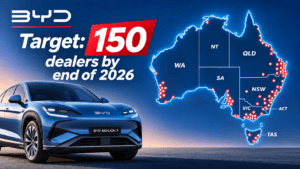
Australia is becoming an increasingly competitive market for Chinese automotive manufacturers, with established brands and newer entrants expanding their product offerings and dealership representation.
The October results have several potential implications for Australia’s automotive sector.
Greater competition on pricing: Continued export growth could intensify competition as manufacturers seek to expand their international sales volumes.
Expanding dealership networks: Growing international ambitions may create further opportunities for dealership development, distribution partnerships, service operations and automotive employment.
Pressure on established manufacturers: Increasing competition across conventional, hybrid and electric vehicle segments could place additional pressure on existing brands to defend their market share.
Changing dealership economics: Greater competition may influence vehicle margins, sales volumes, inventory management and the profitability of individual dealerships.
Overseas Markets Are Becoming Increasingly Important
China remains the world’s largest automotive market, but the October results demonstrate that domestic sales performance and international growth are moving in different directions for several major manufacturers.
While a single month’s results do not establish a permanent trend, the scale of export growth is significant.
For Australia’s automotive industry, the implications extend beyond vehicle sales figures.
The continued international expansion of Chinese automotive manufacturers is reshaping competition across vehicle pricing, distribution, dealership networks and market share.
With manufacturers increasingly looking beyond their domestic market for growth, Australia’s already competitive automotive landscape could become more crowded.
The rapid growth in Chinese car exports is particularly relevant to Australia, where Chinese manufacturers are continuing to expand their market presence. As international sales become increasingly important, competition for Australian customers, dealership representation and market share is likely to intensify.